Branding
Logo vs. Brand Identity: What You Actually Need Before Launching a Website
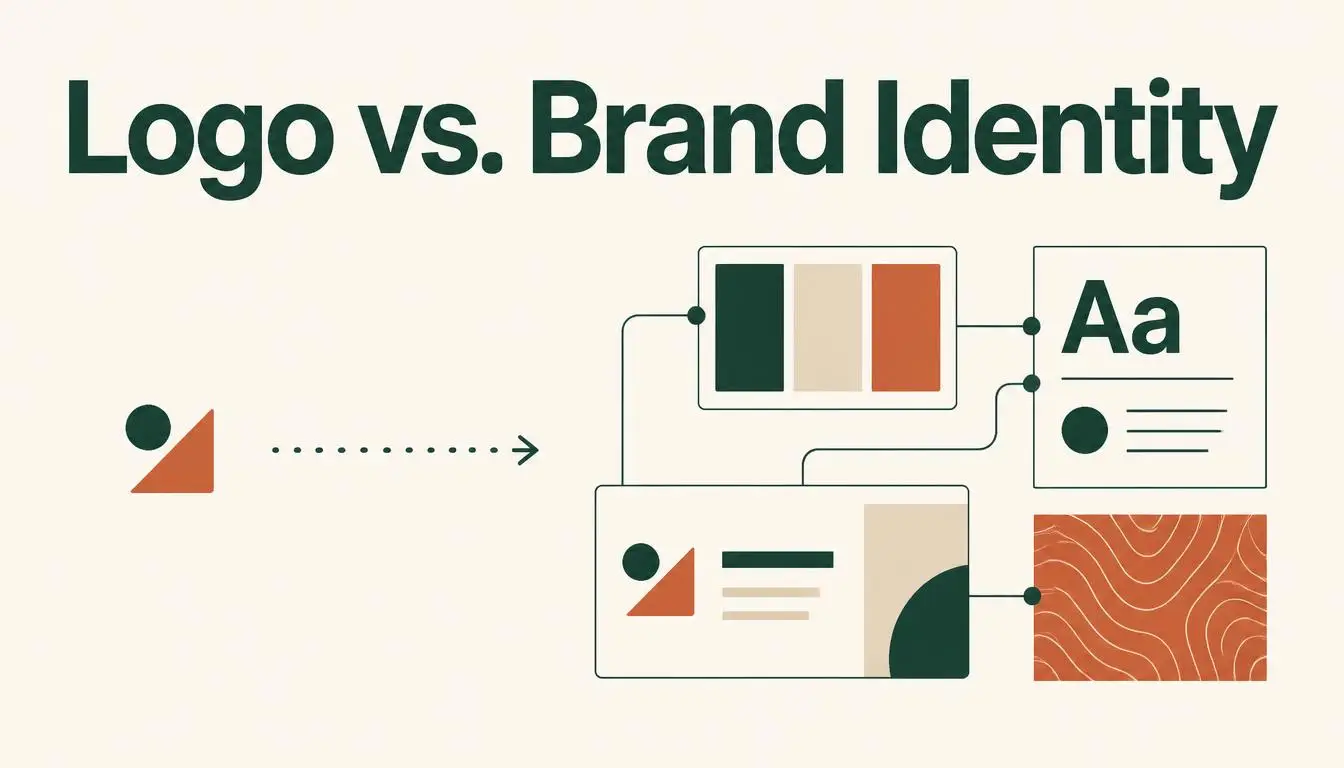
A logo is one asset. A brand identity is the whole system that logo belongs to — color palette, typography, imagery style and voice, documented so anything built later stays consistent. Most small businesses launch a website with only the first one, then quietly patch inconsistencies for years because the second one was never actually defined.
I get sent a lot of logo files before a website project starts — a PNG, sometimes a PDF, occasionally just a screenshot from an old Canva project. Almost never a style guide. That’s not a judgment on the business owner; nobody tells you a logo and a brand identity are different things until you’re three pages into a new website and realize nobody decided what color the buttons should be, or which of the four fonts in the old logo file is actually “the” brand font.
What a logo actually is
A logo is a mark — a symbol, a wordmark, or both — designed to be instantly recognizable at a glance. That’s its entire job. It doesn’t tell a designer what color your website background should be, what your headings should sound like, or whether your photography should feel warm and candid or crisp and corporate. Asking a logo to carry all of that is exactly how a website ends up looking like four different websites stitched together.
What a brand identity actually includes
A brand identity is the documented system the logo lives inside. Five pillars usually cover it:
Primary mark, alternate versions, minimum size, clear space rules.
Primary and secondary colors, with accessible contrast ratios defined.
Which typefaces, what hierarchy, web and print equivalents.
Photography or illustration direction, so visuals feel like one brand.
How the brand actually sounds in writing, with real examples.
Here’s the part that catches most business owners off guard: research on brand guideline usage has found that the vast majority of companies technically have some form of brand guidelines, yet only a quarter to a third of them actually apply those guidelines day to day. The document exists. It just isn’t the thing anyone actually opens before building a landing page or a social post — which is exactly how drift happens even at businesses that did the work once.
Why this matters before you build a website
A website is the single largest, longest-lived application of your brand identity you’ll ever build. Every page multiplies whatever decisions were made — or never made — about color, type and imagery. Build it around a logo alone, and every new page becomes a fresh negotiation about what “on brand” even means. Build it around a defined identity, and the website becomes an extension of decisions that were already made once, correctly.
Consistent color use specifically has been linked to up to an 80% increase in brand recognition, and it typically takes five to seven repeated impressions before a brand actually becomes familiar to someone. Every inconsistent touchpoint — a slightly different blue on Instagram than on the website — resets that count instead of adding to it.
The macro case, if you need one for a business partner
If revenue percentages alone don’t move the room, there’s a bigger number worth having ready: McKinsey’s research on the business value of design found that companies with the strongest design practices outperformed the S&P 500 by as much as two to one in revenue growth and total returns to shareholders. That’s not a claim about logos specifically — it’s a claim about businesses that treat design, identity included, as a strategic decision rather than a cosmetic one. The small-business version of that same principle is simpler: a site built on a real identity system reads as more trustworthy within seconds, before a visitor reads a single word of copy.
What it actually costs, roughly
For most small businesses, branding is worth budgeting 5-15% of annual marketing spend toward. A properly built visual identity system commonly starts in the low thousands; a complete strategic project — positioning, voice, full guidelines, not just visuals — runs higher depending on scope. Either is almost always cheaper than the alternative: about half of small businesses end up redesigning their logo within five years, often because it was never built on real strategy in the first place, just picked because it “looked good” at the time.
Quick test: do you have a logo, or a brand identity?
- Could someone else pick your exact brand colors without asking you? (Hex codes, not “sort of blue-ish.”)
- Is there a written answer for which font goes where?
- Do you have a rule for how your logo should never be used?
- Could a freelancer build an on-brand Instagram post without a call with you first?
- If you answered no more than once, you have a logo — not yet an identity.
We build the two together deliberately — see logo & wordmark design for the mark itself, or brand identity for the full system, both of which plug directly into a web design project instead of being handled as an afterthought once the site’s already built. It’s the same reasoning behind why we scope logo and identity work as part of the same conversation as the website itself, rather than two separate projects handed to two separate people who never talk to each other.
Not sure which one you actually need?
Tell me what you have already and I’ll tell you honestly whether it’s a logo, a starting identity, or something that needs to be rebuilt from strategy up.
Start a projectFrequently asked questions
What’s the difference between a logo and a brand identity?
A logo is one visual asset — a mark or wordmark. A brand identity is the full system it belongs to: the logo alongside a defined color palette, typography, imagery style, and voice, all documented so anyone building anything for the business — a website, a social post, a business card — produces something consistent.
Do I need a full brand identity before I build a website?
Ideally yes, or at least alongside it. A website built around a logo with no defined color system or typography usually needs a visual overhaul within a year or two, once inconsistencies across the site start to show. Building the identity and the website together avoids paying for that rework twice.
How much does a brand identity cost for a small business?
Small businesses typically invest 5-15% of their annual marketing budget in branding. A professional visual identity system commonly starts in the low thousands, while a complete strategic branding project — including positioning, voice and full guidelines — can run considerably higher depending on scope.
Why do so many small businesses only have a logo and nothing else?
Usually because a logo feels like the finish line — it’s the one deliverable that feels tangible and “done.” The gap shows up later: the first time someone needs a LinkedIn banner, a print flyer, or a new page on the website, and there’s no documented color palette or typography to reference, so everything gets picked “by feel” and starts to drift.
How often should a small business redesign its logo?
About half of small businesses redesign their logo within the first five years, usually as the business, audience, or market shifts. A logo built as part of a documented brand system tends to need less drastic redesigns over time, since the underlying strategy behind it doesn’t have to be rebuilt from scratch.